
 English
  Spanish
  Portuguese
  Russian
  French
  Japanese
  Indonesian
  German
  Italian



A Global Shift Toward Circular Economy Thinking
Over the past decade, sustainability has moved from a long-term vision into a practical requirement shaping how industries operate. Driven by frameworks such as the United Nations Sustainable Development Goals (SDGs), companies across sectors are being asked to rethink how materials are sourced, used, and returned to the environment after their lifecycle ends.
This shift is closely connected to the rise of the circular economy. Instead of the traditional “take-make-dispose” model, industries are now encouraged to design systems where resources are used more efficiently, waste is reduced, and materials remain in circulation for longer.
The circular economy is no longer an abstract concept. It is becoming a practical direction for material development and product design across global industries.
Beauty is part of this transformation, even if the progress is not uniform across all categories.

How the Beauty Industry Is Responding
The beauty industry has made visible progress in sustainability, particularly in packaging and formulations. Many brands have introduced recyclable packaging, refill systems, and cleaner ingredient standards. These changes reflect both consumer expectations and regulatory pressure.
However, sustainability is now expanding beyond what is immediately visible to consumers.
Brands are increasingly being evaluated on the full lifecycle of their products, including sourcing, manufacturing, and end-of-life impact. This broader view is influencing how product categories are developed and how suppliers are selected.
As a result, attention is gradually shifting toward areas that were previously less discussed, including beauty tools.
The Emerging Transformation in Makeup Brush Manufacturing
Makeup brushes sit at an interesting intersection of performance, design, and material complexity. A single brush may combine fibers, metal components, adhesives, coatings, and handles made from different materials. Each of these elements plays a role in durability and user experience.
Traditionally, innovation in this category has focused on improving performance. Softer fibers, better powder pickup, improved blending, and longer-lasting structures have all been key development goals.
Now, however, a new layer is being added to product development.
Manufacturers are increasingly expected to consider environmental impact alongside performance. This includes how materials are sourced, how products are produced, and how they behave after disposal.
Makeup brush manufacturing is entering a phase where performance expectations and sustainability considerations are developing in parallel.
This shift is gradually reshaping material choices across the category.
The Rise of Sustainable and Biodegradable Brush Fibers
As sustainability expectations increase, material innovation has become a central focus for beauty tool development. Manufacturers are exploring alternatives that reduce environmental impact while maintaining functional performance.
These include recycled materials, bio-based fibers, and lower-impact synthetic options. Among these emerging directions, biodegradable brush fiber has gained growing attention.
A biodegradable brush fiber is designed with the intention of reducing long-term environmental persistence compared to conventional synthetic fibers. Instead of remaining in the environment for extended periods after disposal, these fibers are developed to break down more naturally under specific conditions.
Biodegradable brush fiber represents a shift from purely performance-driven material design toward lifecycle-aware material thinking.
It does not replace the need for quality or usability. Instead, it introduces a new consideration into material development: what happens after the product is no longer in use.
The Role of Biodegradable Brush Fiber in Circular Systems
To understand the significance of biodegradable brush fiber, it is important to place it within the broader context of circular economy thinking.
In traditional material systems, beauty tools are designed primarily for use-phase performance. Once they reach the end of their lifecycle, they often enter waste streams without a clear recovery path, especially when multiple materials are combined.
Biodegradable materials introduce a different perspective.
They are part of an ongoing effort to reduce long-term environmental persistence and align product design with more circular principles. While not a complete solution to material waste challenges, they represent an important step in rethinking how beauty tools fit into broader environmental systems.
Biodegradable brush fiber should be understood as a transitional material within the evolution toward more circular beauty tool systems.
It reflects an industry that is still in transition, moving from linear consumption models toward more responsible material cycles.
How Biodegradable Fibers Differ From Conventional Brush Materials
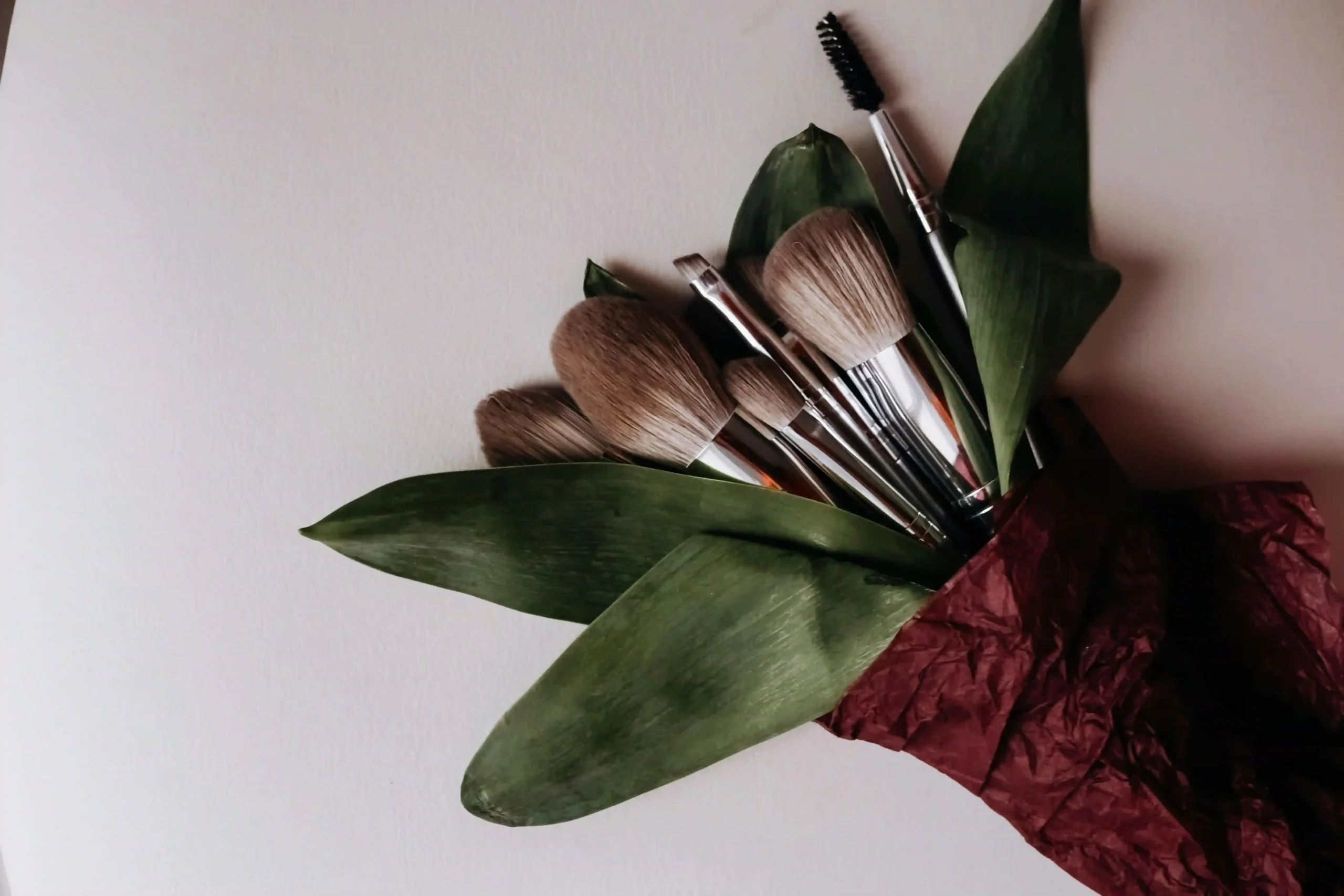
The difference between biodegradable brush fiber and conventional synthetic fibers is not only technical. It is also conceptual.
Traditional synthetic fibers are designed primarily for durability and consistent performance during use. They are effective in delivering softness, control, and product pickup, which are essential for makeup application.
Biodegradable fibers, on the other hand, introduce an additional design dimension: lifecycle behavior.
The key distinction lies in how materials behave after their functional life has ended.
While conventional fibers are optimized for stability and longevity, biodegradable fibers are developed with consideration for environmental breakdown under appropriate conditions.
The fundamental difference is not only how the fiber performs during use, but how it exists after use.
This shift reflects a broader change in how materials are being evaluated across industries, where lifecycle impact is becoming part of the design conversation.
What This Means for Beauty Brands and Supply Chains
As sustainability becomes more integrated into procurement and product development processes, beauty brands are beginning to evaluate materials through a broader lens.
This includes not only performance and cost, but also environmental alignment and future regulatory readiness.
For many brands, sustainability is becoming part of early-stage product planning rather than a final-stage consideration. This shift is influencing how suppliers are selected and how product development conversations begin.
In this context, materials such as biodegradable brush fiber are not positioned as marketing features, but as part of a broader strategic direction in product design.
Sustainability is increasingly influencing material decisions at the beginning of the product development process, not just at the packaging stage.
This change is gradually reshaping expectations across the supply chain, from raw material suppliers to OEM manufacturers.
Toward a More Circular Future for Beauty Tools
The beauty industry is still in the early stages of fully integrating circular economy principles into all product categories. While packaging has made significant progress, beauty tools are now beginning to follow a similar path.
As material science continues to evolve and sustainability expectations become more defined, beauty tools are likely to play a more visible role in future ESG strategies.
Biodegradable brush fiber represents one of the early material directions supporting this transition. It is part of a broader movement toward designing products with greater awareness of their full lifecycle impact.
The future of beauty tools will be shaped not only by performance innovation, but by how effectively materials align with circular economy principles.
This evolution is gradual, but it is already underway. Each step in material development contributes to a larger shift in how beauty products are designed, produced, and understood.
In this sense, biodegradable brush fiber is not the final answer, but part of an ongoing transformation in how the industry defines responsibility and innovation.